
Small appliances are where Australian brands get hurt.
Not because Chinese factories can't make a good rice cooker. They can. The problem is the gap between the showroom and the production line, and the gap between “we can make it” and “we can make 5,000 of them, identically, with the certifications your market needs.”
On 9 September 2026 we spent a day inside a small-appliance factory in Guangdong. Same process we run before recommending any supplier. Here's what we actually look at, and why each of these things matters for your purchase order.
The showroom wall: what's really in production

A wall of ovens, steamers and cookers. Impressive — but the first question we ask is always the same: which of these ran on the line last month?
A showroom tells you what a factory wants to sell. The production schedule tells you what it actually makes. Catalogue-only models mean re-tooling, re-learning, and your order becoming the test batch. We ask for the last three months of production records and cross-check them against what's on display. The models with stable, repeat production are the only ones we'd recommend for a first order.
Up close: the details photos never show

Finish, dial feel, lid fit. The things a catalogue photo can't tell you.
This is the part of the visit you can't do over video call. We pick up the units. How does the dial turn — smooth, or gritty? Does the lid seat evenly all the way around, or does it rock? Is the print on the control panel sharp or slightly blurred at the edges? None of these are deal-breakers alone. Together, they tell you how tight the factory's process control is. Sloppy details on the showroom samples mean sloppy details at unit 4,000.
The line: where we spend most of our time

Assembly and in-line testing. This bench is where we watch longest — it's where good factories separate from bad ones.
Two questions matter here. First: is every unit powered on and tested before packing, or just a sample? For anything with a heating element or a motor, we want to see 100% function testing, and we want to see what happens to the failures — is there a rework station, or do rejects quietly go back into the box?
Second: what's the line actually producing right now, and how does it compare to the showroom? If the line is running a model nobody showed us upstairs, that tells us where the factory's real volume goes. We'd rather you buy the product they make every day than the one they dusted off for our
Staging: how finished units are handled

41]]
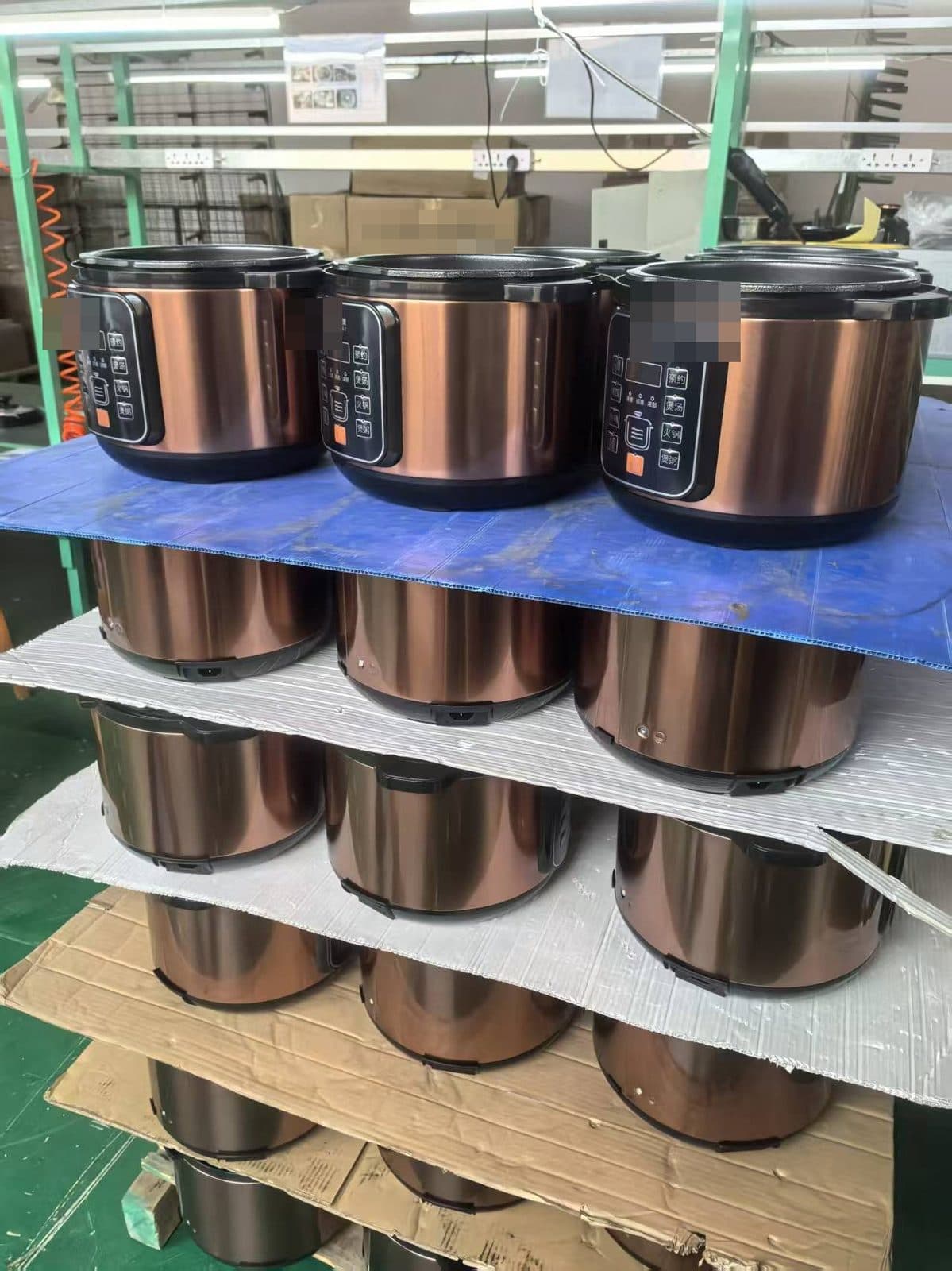
Finished units staged on racks between stations. How a factory moves and stores goods mid-process predicts what your order looks like on arrival.
Unpacked units stacked on bare racks, dragged across concrete, left in dust — every scuff here becomes a customer complaint later. We look at how goods move between stations: are they protected, is the floor clean, is there a system or is it improvisation? This factory was fine. We've seen worse, and we've walked away from worse.
The compliance question
For the Australian market, this is the part that actually keeps us up at night. Electrical products need RCM compliance, and the certificate has to match the exact model you're importing — not a “similar” model, not last year's version.
We don't certify products ourselves, and we'd be suspicious of any sourcing agent who claims to. What we do: ask what marks and certificates the factory claims, get the certificate numbers, and verify them independently with the issuing body. If the numbers don't check out, or the factory gets vague when you ask, that's your answer. A factory that's genuinely certified will hand you the paperwork before you finish the

Close-up checks: lid fit, panel alignment, print quality. The small things that become warranty claims.
Why we do it this way
A sample tells you what a factory can make on its best day. A day on the floor tells you what it makes on an average Tuesday. For a $30,000 purchase order, the second one is the only thing that matters.
Every appliance supplier we recommend to an Australian brand goes through this visit. If it doesn't pass, we tell you, and we keep looking.
Buying small appliances from China? Start with our 5-step factory audit checklist, or talk to us about getting your supplier checked before you pay a deposit.